A vacant lot in the western and southern growth corridors still looks, on a Saturday morning, like the last affordable way into a new house. The price on the hoarding is the land price. It is not the house price, and it is not the site price. Between the contract of sale and the day a slab is poured, Ipswich and Logan buyers routinely discover filled platforms, covenant committees, retaining they now own, and a calendar that has them paying for dirt they cannot yet build on.
This is a land and suburbs problem first. The builder comes second. If you reverse that order — fall in love with a display home, then hunt for any title that fits the envelope — you will buy someone else's leftover earthworks.
Where the cheap blocks actually sit
The current map is not mysterious. In Ipswich the volume sits in the Ripley Valley Priority Development Area and in the Springfield system: Springfield Lakes, Augustine Heights, Brookwater's cheaper edges, and the lots still being cut behind Springfield Central. In Logan the equivalent is Yarrabilba, the Greater Flagstone PDA, and the long, awkward belt through Park Ridge and Park Ridge South where rural-residential lots are being recut into suburban ones.
Each of those names behaves differently. Springfield is the most finished. You are buying into an existing town centre, an existing school pattern and an existing covenant culture that has had twenty years to become fussy. Ripley is younger and more variable: some precincts are civil-complete and titled; others are still a promise of a park and a bus route. Yarrabilba is a planned town with a single master-developer logic and a design-guideline machine that does not much care what your architect thinks. Flagstone is larger, more fragmented, and more likely to leave you adjacent to future stages, future noise and future haul roads. Park Ridge is the least "estate" of the set — a mix of old acreage, new small lots, and drainage lines that were paddocks five years ago.
None of this makes a lot unsaleable. It does mean you should stop treating "Ipswich" or "Logan" as a single soil or a single commute. Drive the lot at 7.30am on a school day and again after a February storm.
Covenants are not a vibe. They are a second planning scheme
Almost every titled lot in a master-planned estate carries a building covenant or a set of design guidelines administered by the developer or a community-title body. Sales staff will call this "protecting the streetscape". What it actually does is add a private approval layer on top of the Ipswich Planning Scheme, the Logan Planning Scheme, or the relevant PDA development scheme.
Typical controls in these corridors include a minimum air-conditioned floor area, a ban on the cheapest facade materials facing the street, a short list of roof colours, a rule about garage-door dominance, a landscaping schedule, and a prohibition on front-yard sheds, cubbies and visible boats. Many covenants also set a construction-start deadline — often twelve or eighteen months from settlement — and a construction-finish deadline after that. Miss the start date and you can be asked to sell, or to pay a bond you will not enjoy retrieving.
The document that matters is the one registered on title, plus any guideline booklet incorporated by reference. The two-page summary in the sales pack is marketing. Have a solicitor read the covenant for veto rights, time limits, fee-recovery clauses and whether the developer can amend the guidelines after you buy. Then take the same booklet to your builder before you sign a building contract. A house-and-land package that has not been covenant-checked is not a package. It is a hope.
If you want a custom house, or anything that looks like the small-lot and infill work happening inside Brisbane, assume the estate will fight you on roof pitch and cladding. Volume builders who already have approved facades will move faster. That speed is a commercial fact, not a design argument.
Filled land is the hidden line item
A large share of lots in Ripley, Yarrabilba, Flagstone and the newer Park Ridge cuts are manufactured platforms. Cut from a ridge, fill in a gully, compact, certify, sell. Fill is not automatically a defect. Uncontrolled fill, poorly compacted fill, fill of unknown origin, and fill that sits over a buried drainage line are defects you will pay for in the footing design.
Ask for the lot's earthworks drawings, the compaction certificates, and any geotechnical sign-off that was done for the civil works — not just the one-page "site classification" a builder will later commission. A classification of P, or a note that the site is filled, should change the price you are willing to pay, because it will change the slab. Waffle pods on deep fill are a different conversation from a strip footing on residual clay. That conversation belongs in our site-classification guide, but the land-buying rule is simpler: if nobody can show you what is under the grass, you are the person who will find out with a variation.
Watch for lots that were the last ones released in a stage. They are often the leftover geometry — the ones against a detention basin, a future arterial, a rising sewer, or a batter that needs a wall taller than a person. Cheap is a clue.
Retaining is a liability that walks with the title
In rolling country, which is most of Ipswich and a good deal of Logan, a level pad is made by a wall. Sales staff will point at a neat sleeper or block wall and call it "done". Ask four questions and do not leave until you have answers in writing.
Who owns the wall? Who maintains it? What is its design life, and is there an engineer's certificate for the as-built height? Where does the water go? A wall without a working agricultural drain is a future movement claim. A wall on your title is your insurance problem, even if the neighbour's pool sits above it. A wall on the neighbour's title that holds up your pad is a dispute waiting for a wet year.
If the lot needs a new wall to make the house work — a stepped rear yard, a drive that has to hit the garage at a legal gradient — price that wall before you bid. Retaining, drainage and fencing are not "landscaping". They are structure.
Settlement timing is a construction problem
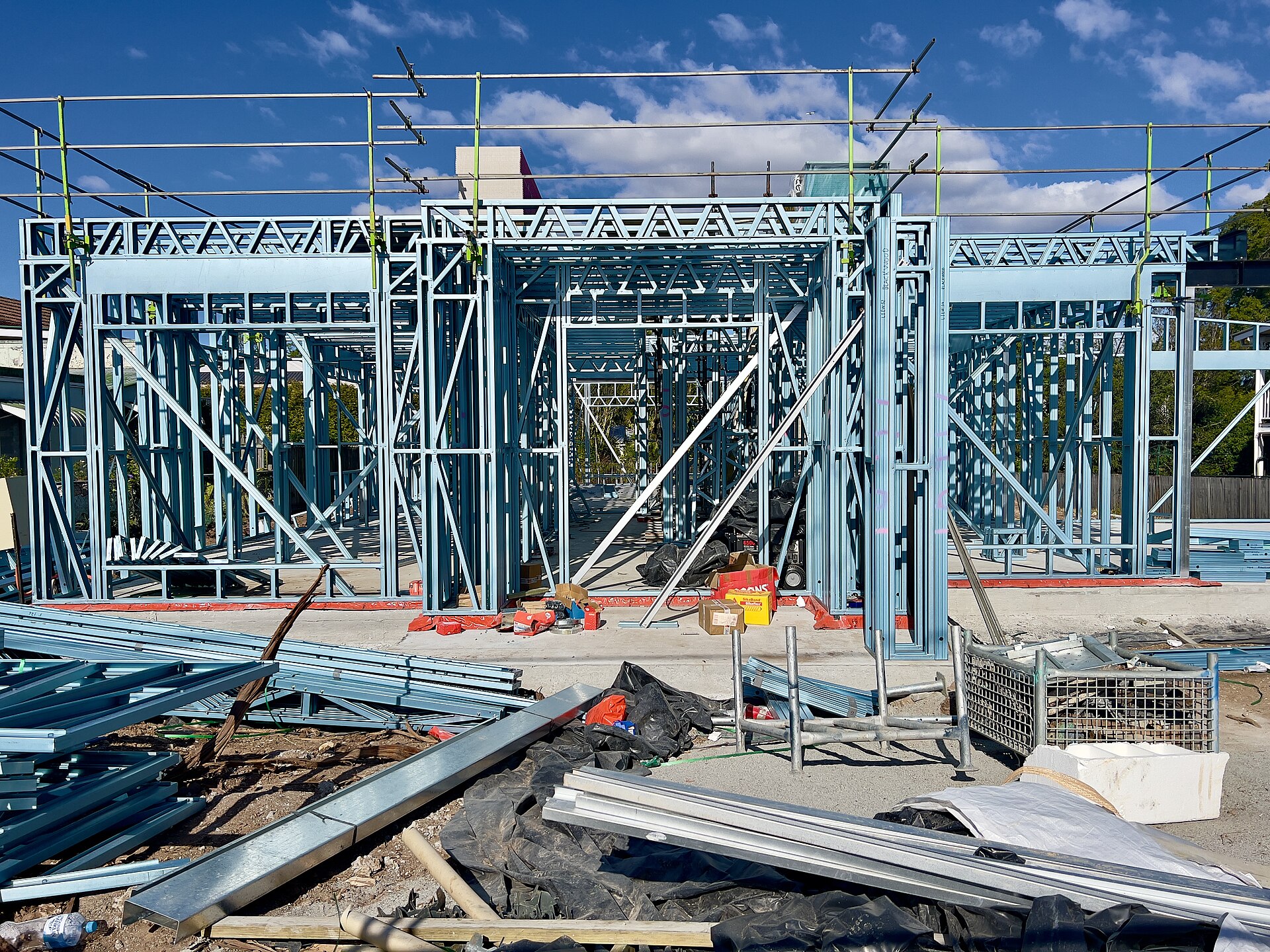
The most expensive sentence in a growth-corridor land contract is a settlement date that has no relationship to a builder's start date. Titles in PDA stages can issue while the street is still a gravel haul road, while sewer is not live, or while the developer is still holding a bond over unfinished parks. You can settle. You cannot pour.
Meanwhile the land loan starts, council rates start, and you are still paying rent or an existing mortgage. Six months of that double-carry will eat the "saving" you thought you made against an inner-Brisbane knockdown. Compare that path with knockdown-rebuild versus buying land before you congratulate yourself on the square-metre rate.
Work backwards from a realistic slab date. A volume builder who has not seen the soil report, the covenant pack and the survey will not give you a date you can take to a bank. A custom builder will be slower again. If the land is off-the-plan, treat the estimated title date as a rumour until the survey plan is lodged. Put sunset clauses, unfinished-works conditions and access-for-construction rights in the land contract. If the seller will not have those conversations, you are funding their cashflow.
Some lenders will not settle construction finance until title is clean, services are connected and a fixed-price building contract is in place. That is how buyers end up with an unconditional land contract and a builder who is twelve weeks away from being able to sign.
Walk the block as if you already own the mud
Before you sign, stand on the pegs with the survey and a printout of the overlay maps from the relevant council or PDA. You want flood, overland flow, bushfire, koala or other vegetation constraints, easements, and the location of sewer, stormwater and electricity. An easement that looks minor on a plan can forbid a pool, a shed or the only logical driveway.
Look at the neighbouring lots, not just yours. A two-storey envelope next door on a 12.5-metre frontage will look into your living room if both of you push to the setback. Estate design guidelines that demand a big front porch do not also guarantee privacy. If you are on a corner, assume two frontages of fencing rules and no easy place to hide the bins.
Then call the builder you actually intend to use and ask whether this lot, with this fall, this fill and this covenant, is a standard inclusion or a site-cost letter. Site costs are where house-and-land pricing stops being a headline. Get that letter before cooling-off ends. If the agent says "the builder will sort it after you buy the land", you are being sorted.
Acreage on the edges of these same local government areas is a different product — septic, bushfire and long driveways — and it is covered in the fringe acreage guide. Do not use an estate checklist on a two-hectare gully.
What a sensible offer looks like
Pay for a survey identification if the pegs are missing. Pay for a proper geotechnical investigation if the lot is filled, stepped, or classified only by a desktop note. Have the solicitor requisition the compaction certificates and any incomplete civil works. Price the retaining, the drive gradient, the sewer connection and the covenant-driven facade upgrades as part of the bid.
None of this is hostility to Ripley or Yarrabilba. Those towns will keep growing because the inner city will not suddenly become cheap. The owners who do well there treat the lot as an engineering and legal object, not as a weekend emotion. A vacant block is the first construction decision you make. Make it like one.
Frequently asked questions
Can I ignore a developer covenant if Ipswich or Logan Council has already approved the estate?
No. A covenant is a private contract that sits on title. Council may have signed off the subdivision, but the developer can still refuse a facade, a roof colour or a front fence, and can seek an injunction if you build anyway. Read the registered document, not the sales brochure.
Who owns a retaining wall on the boundary of a new estate lot?
It depends on the plan, the covenant and who built the wall. In many Ipswich and Logan estates the downhill owner inherits the structure and the insurance. Confirm ownership, height, drainage and remaining design life in writing before you exchange.
Should I settle on the land before I have a builder ready to start?
Only if you can carry the land loan, rates, and rent or existing mortgage without panic. A title that settles six months before a slab date is a common way a cheap block becomes an expensive year. Align the land contract, finance and builder's start window before you sign.